Chronic Kidney Disease (CKD)

CKD Overview

There are limited nephrology resources within health systems and treating people in primary care settings can increase the health care capacity, slow disease progression, and improve outcomes in CKD.
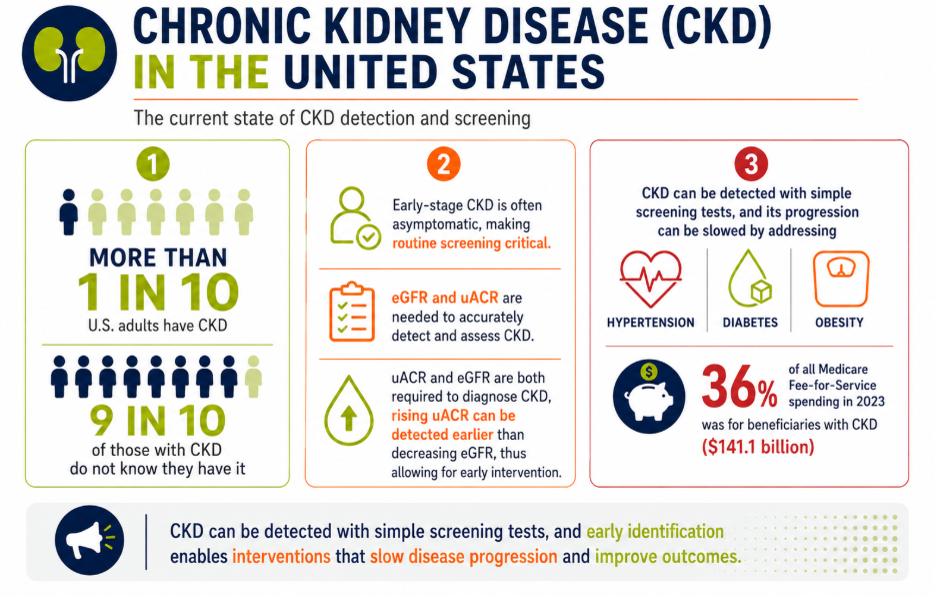
Infographic showing the prevalence of chronic kidney disease in the United States

Source: See CKD Resources (References 1, 3, 4)

Overview diagram of chronic kidney disease, including definition and risk factors

Diagram summarizing chronic kidney disease management approach

Source: See CKD Resources (Reference 5)
Provider Tools for Kidney Disease Screening and Diagnosis

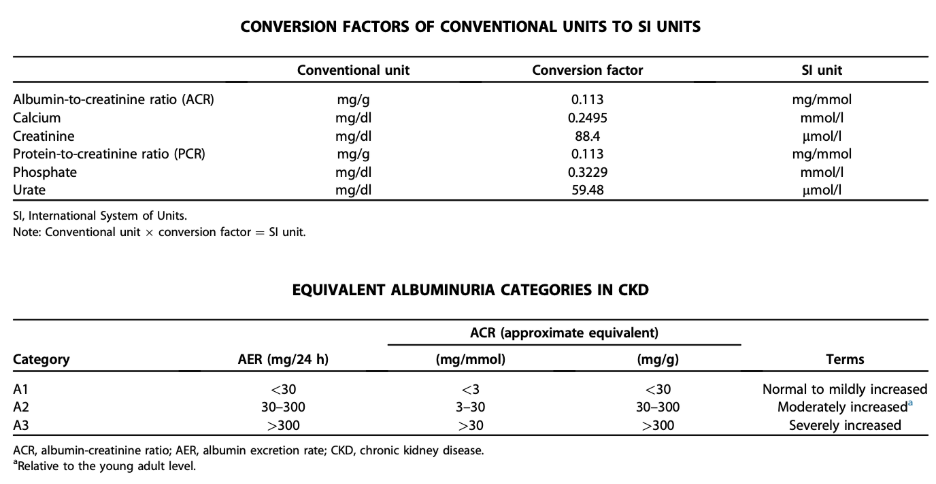
Table of conversion factors between conventional and SI units for kidney function lab value

Table showing chronic kidney disease stages 1 through 5, corresponding eGFR ranges in mL/min, and associated kidney function levels from healthy to kidney failure
Click to View the Stages of Kidney Disease

When and How to Screen for CKD

  • Screen at least annually in patients with T2D and/or HTN
  • Order both uACR and eGFR - both tests are required to detect and stage CKD
  • Consider CKD screening in patients with one or more risk factors:
    • Age ≥60 years
    • Obesity
    • Family history of kidney diesase
    • History of acute kidney injury (AKI)
    • Tobacco use
    • Low socioeconomic status
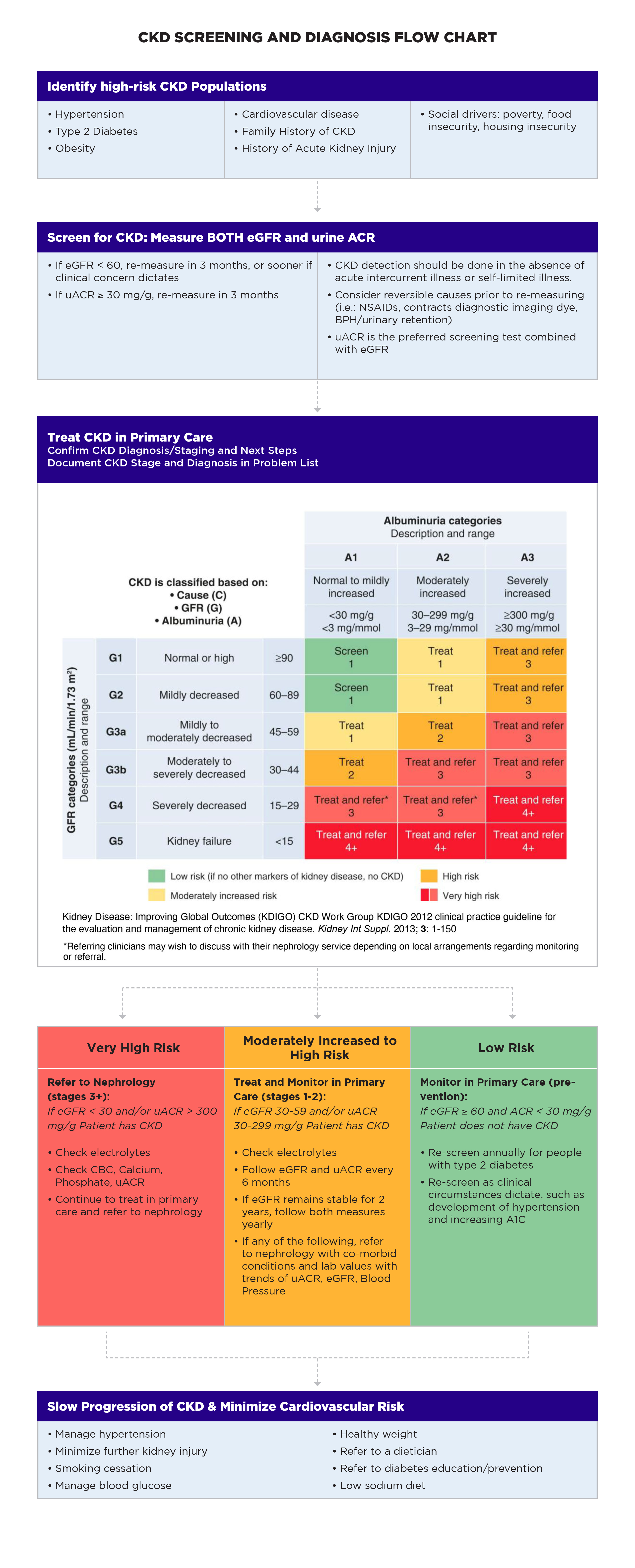
Flow chart outlining the steps for screening patients for chronic kidney disease

Learn More

Urine Albumin-Creatinine Ratio (uACR)

  • Albuminuria (uACR ≥30 mg/g) reflects kidney damage and is associated with an increased risk of CKD progression and CVD. Regular monitoring can guide treatment decisions and help prevent complications
  • uACR is often the earliest marker of kidney damage. In patients with diabetes, elevated uACR may be detected years before a measurable decline in eGFR, allowing earlier diagnosis and intervention
  • Quantitative uACR is the preferred test for detecting and monitoring albuminuria and is the gold standard for CKD screening
    • Urine dipsticks are not recommended because they are less sensitive and less precise
  • Confirm by repeating an elevated uACR (≥30 mg/g) at least once
Traffic light graphic showing uACR (urine albumin-to-creatinine ratio) risk levels: red for 300 mg/g or higher, yellow for 30 to 299 mg/g, and green for lower than 30 mg/g

Estimated Glomerular Filtration Rate (eGFR)

  • eGFR is a preferred blood test for assessing kidney function and estimating the kidneys' ability to filter waste products from the blood
  • eGFR is calculated from serum creatinine and should be interpreted alongside the patient's clinical history and uACR results
  • A persistently reduced eGFR (<60 mL/min/1.73 m² for ≥3 months) is consistent with CKD, even in the absence of albuminuria
  • A declining eGFR indicates worsening kidney function and can guide CKD staging, medication dosing, referral decisions, and monitoring for disease progression  

Table showing the 6 stages of chronic kidney disease with corresponding GFR ranges and percent of kidney function remaining
eGFR calculator


Source: See CKD Resources (Reference 2, 6, 8, 9)

Treatment

  • The goals of CKD treatment are to slow disease progression, reduce cardiovascular risk, prevent kidney failure, and preserve kidney function. Early intervention can delay CKD progression and improve long-term outcomes
  • Key treatment strategies include:
    • Optimize BP control and glycemic management, the two most important modifiable factors for slowing CKD progression
    • Initiate angiotens in converting enzyme (ACE) inhibitors or angiotens in receptor blockers (ARBs) when indicated to reduce albuminuria and protect kidney function
    • Consider SGLT2 inhibitors for eligible patients to reduce CKD progression and cardiovascular events
    • Consider nonsteroidal mineralocorticoid receptor antagonists (nsMRAs) for patients with T2D and persistent albuminuria
    • Promote lifestyle interventions, including nutrition counseling, weight management, physical activity, tobacco cessation, and sodium reduction
    • Refer to a registered dietitian for individualized nutrition therapy and consult nephrology when specialty care is needed
Chronic Kidney Disease Treatment Table

Source: See CKD Resources (Reference 8)

Lifestyle

Lifestyle interventions complement medical therapy and can help slow CKD progression, reduce cardiovascular risk, and improve quality of life.

Priorities

  • Reinforce that lifestyle changes are a crucial part of multi-modal treatment
  • Encourage sustainable behavior changes tailored to the patient's CKD stage, comorbidities, culture, and personal preferences
  • Refer patients to appropriate multidisciplinary resources when needed

Nutrition

Nutrition is a cornerstone of CKD management and should be individualized based on CKD stage, laboratory values, and comorbidities

  • Refer patients to a registered dietitian experienced in CKD nutrition (covered by many insurance plans)
  • Encourage heart-healthy dietary patterns in early CKD
  • Individualize dietary recommendations as kidney disease progresses
    • Stages 1-3
      DASH or Mediterranean diets, sodium limitation, and healthy weight management
    • Stages 4-5
      Individualized recommendations for Calories, Potassium, Phosphorus, Protein, Vitamin D and Fluid as clinically appropriate

Physical Activity

Regular physical activity is safe beneficial across all stages of CKD

  • Start small and build gradually with a variety of aerobic and strength training
    • 150+ min/week of moderate intensity
  • Patients with CKD are at increased risk for reduced muscle mass and physical decline. Resistance training helps preserve strength, independence, and ability to perform daily activities
    •   2x/week strength training

Stress & Mental Health

A CKD diagnosis can be overwhelming and may contribute to increased stress, anxiety, or depression

  • Screen for depression, anxiety, and psychosocial barriers
  • Discuss stress management strategies and healthy coping behaviors
  • Consider referral to behavioral health or counseling services when appropriate
  • Recognize that social, cultural, and financial factors may influence adherence to nutrition, medications, and self-management

Patient Resources:

Source: See CKD Resources (Reference 12, 13, 15)
Health Disparities in CKD

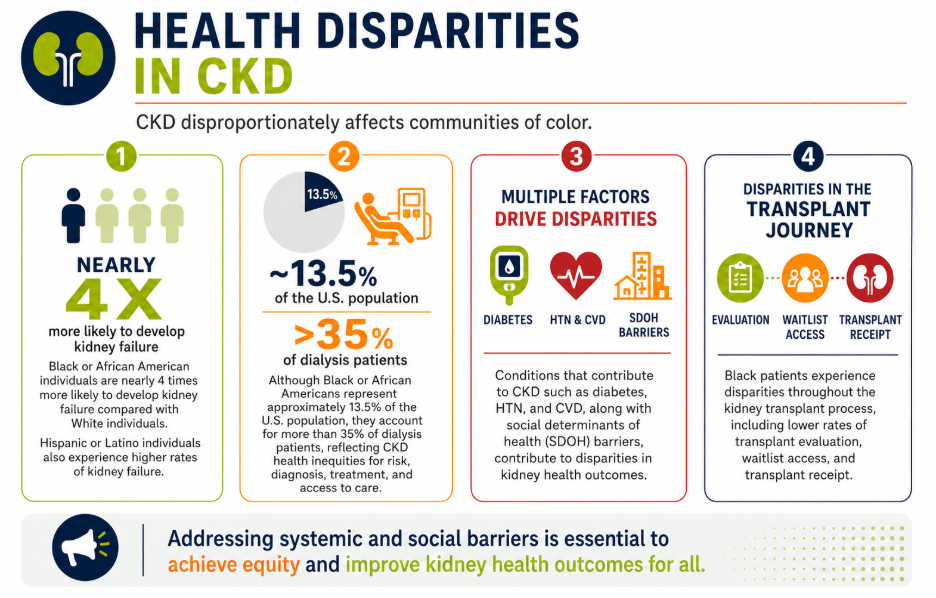
x more likely to develop kidney failure than White individuals. They make up 13.5% of the U.S. population but over 35% of dialysis patients. Diabetes, hypertension/CVD, and social determinants of health drive these disparities, which also affect transplant evaluation, waitlist access, and transplant receipt

What Providers Can Do

  • Promote equitable CKD screening, including appropriate use of eGFR and urinealbumin-to-creatinine ratio (uACR) testing among at-risk patients
  • Identify and address barriers to care, including access to medications, specialty care, transportation, health literacy, and social support
  • Use shared decision-making and culturally responsive communication to support patient-centered CKD management
  • Ensure timely referrals to nephrology and transplant services when clinically appropriate
CKD risk classification grid combining GFR and albuminuria categories to determine risk level and management action (screen, treat, or treat and refer)

Chronic Kidney Disease and Risk Management: Standards of Care in Diabetes—2026

Source: See CKD Resources (References 10, 11)

Back to Cardiovascular Kidney Metabolic Toolkit