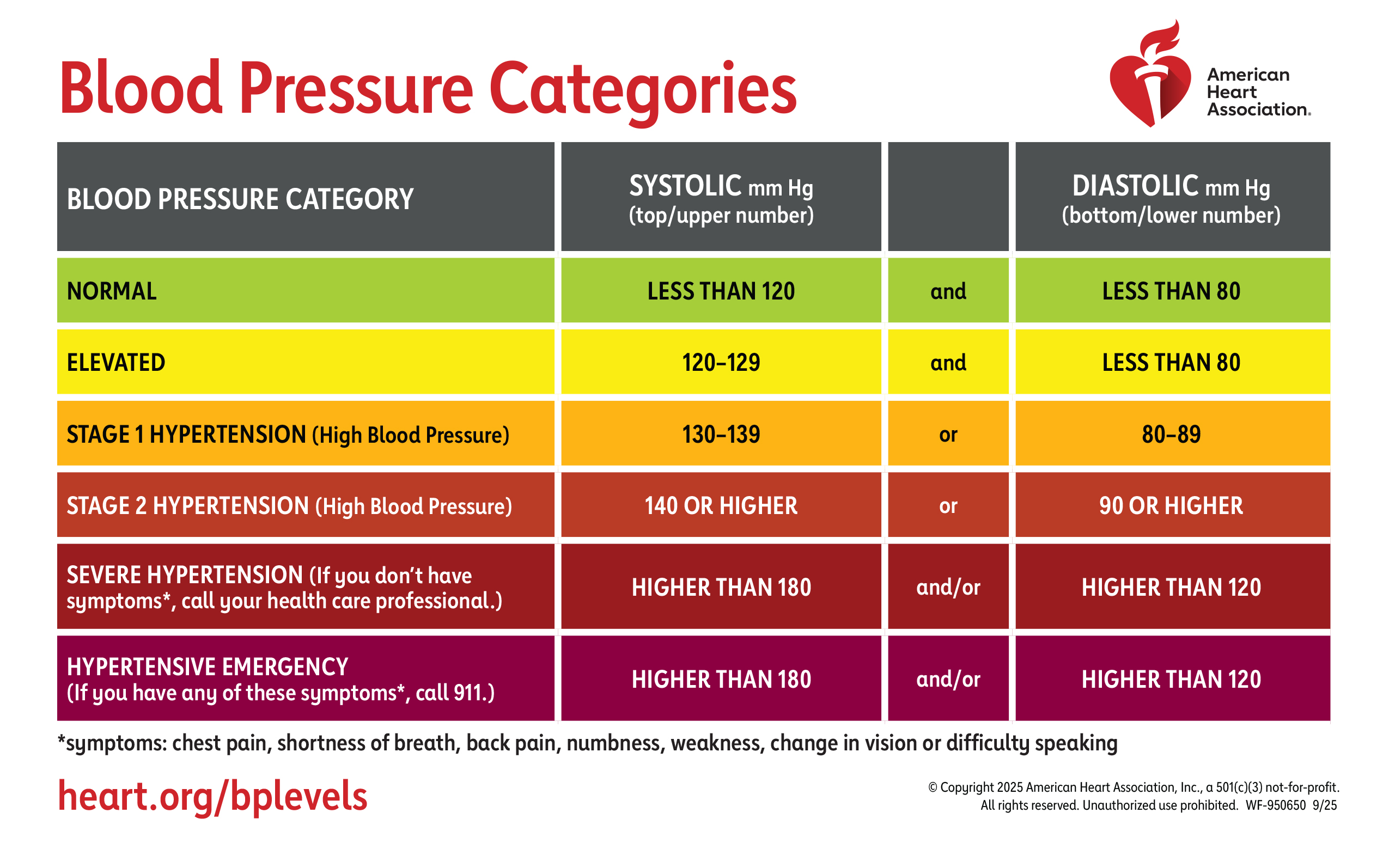
Hypertension

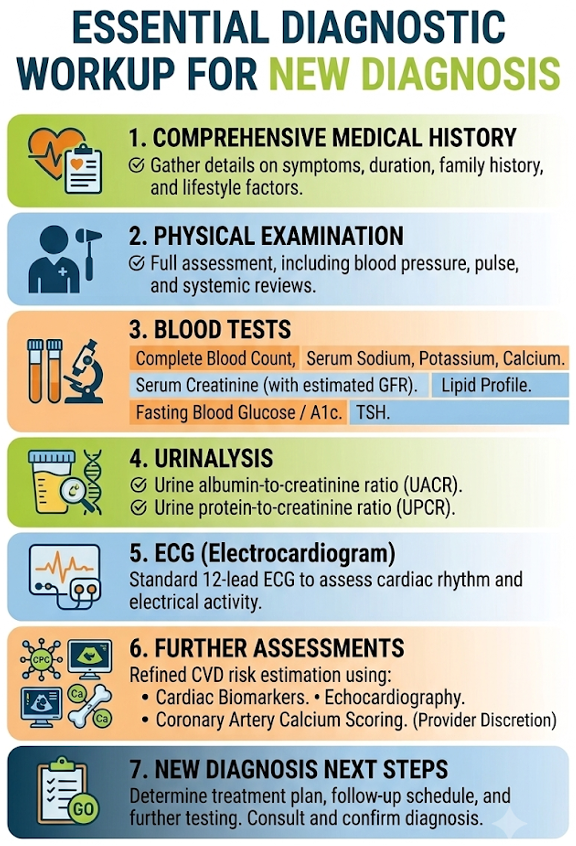
Provider Tools for HTN Screening and Diagnosis Next Steps

Infographic outlining essential clinical steps following a new hypertension diagnosis.

Source: See HTN Resources (References 7, 14, 16)

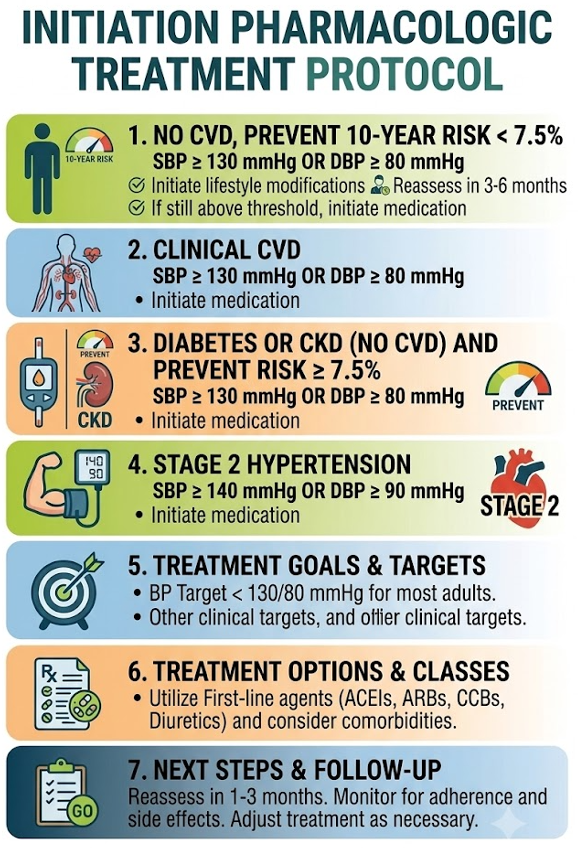
HTN Treatment

Protocol chart for initiating pharmacologic treatment of hypertension, showing recommended first-line drug classes and dosing steps by blood pressure level.
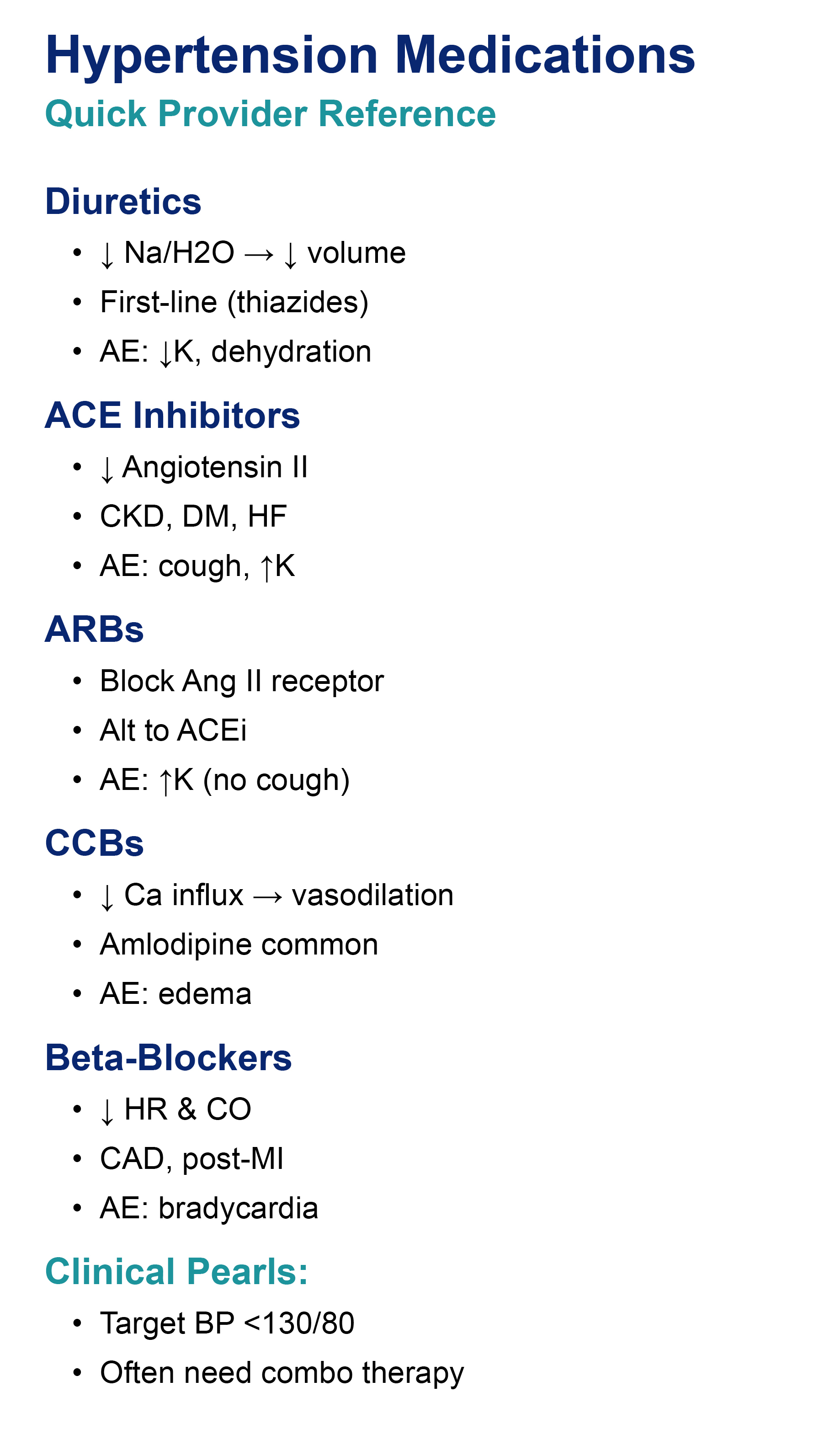
Table of common hypertension medication classes with example drugs and key clinical considerations.

PREVENT Calculator >>

Source: See HTN Resources (References 7, 14, 15, 17)

Improvement Strategy # 1: Accurate Measurement

Recommendation: Implement standardized BP measurement training and competency assessment for all staff involved.

Why is this important?

  • Improves diagnosis and treatment decisions
  • Reduced variability in BP readings
  • Annual competency assessments reinforce best practices
  • Protocol-driven care reduces therapeutic inertia

Therapeutic inertia= lacking a timely adjustment to therapy when a patient’s treatment goals are not met

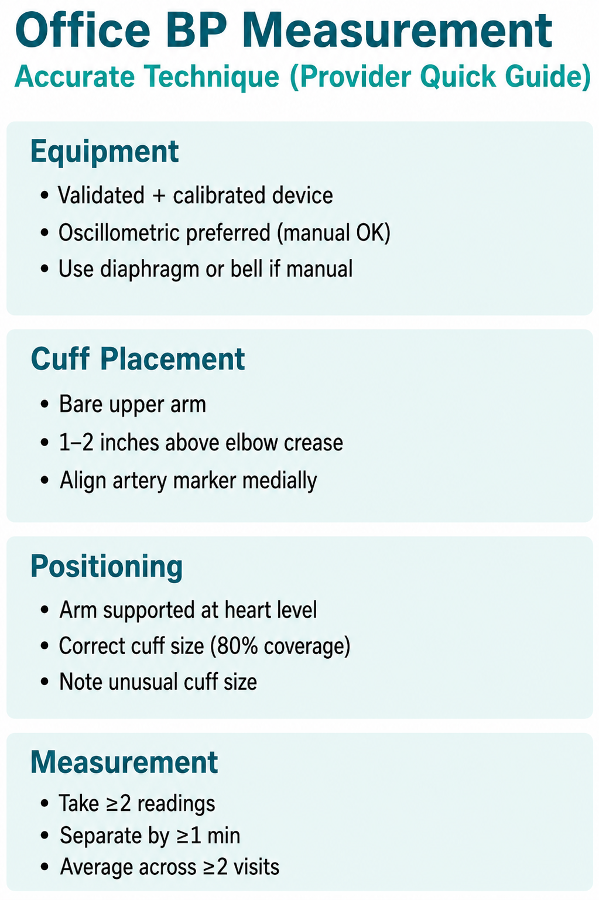
Quick clinical guide illustrating correct technique for measuring blood pressure, including patient positioning, cuff placement, and timing.

Diagram of the recommended office blood pressure measurement workflow, from patient preparation through recording the reading.

AMA BP Measurement Competency >>

  • Annual staff competency assessments help ensure adherence to clinical practice standards.

BP Skills Assessment Check List >>

  • Standardized treatment protocols can reduce therapeutic inertia, improve treatment adherence, and increase BP control.
Infographic on the MAP framework for hypertension care: Measure accurately, Act rapidly, and Partner with patients.

Source: See HTN Resources (References 7, 18, 19)

Implement Self-Measurement Blood Pressure (SMBP) Monitoring

SMBP helps:

  • Reduce effects of white coat hypertension
  • Identify true BP patterns over time
  • Support treatment adjustments


Key practice considerations:

  • Use validated devices
  • Train patients on proper technique
  • Establish how readings will be shared
  • Review readings during follow-up visits


Resources


Patient Education Resources


Source: See HTNResources (References 7, 18, 19)

Improvement Strategy #2: Improve Engagement and Treatment Adherence

Recommendation: Use shared decision-making, patient education, and ongoing follow-up to improve patient engagement, medication adherence, and blood pressure control.

Why it Matters?

Effective hypertension management requires patient-centered communication and ongoing support to help patients understand their condition, participate in treatment decisions, and overcome barriers to achieving BP goals.

  1. Connect with empathy (especially in early interactions)
  2. Listen for underlying feelings, needs, or values
  3. Remain present when listening
  4. Look for cues to speak versus listen
  5. Reflect on the experience

Top 10 Things to Know: Patient-Centered Adult CV Care

Framework diagram for patient-centered cardiovascular care in adults, showing how risk assessment, shared decision-making, and follow-up connect.

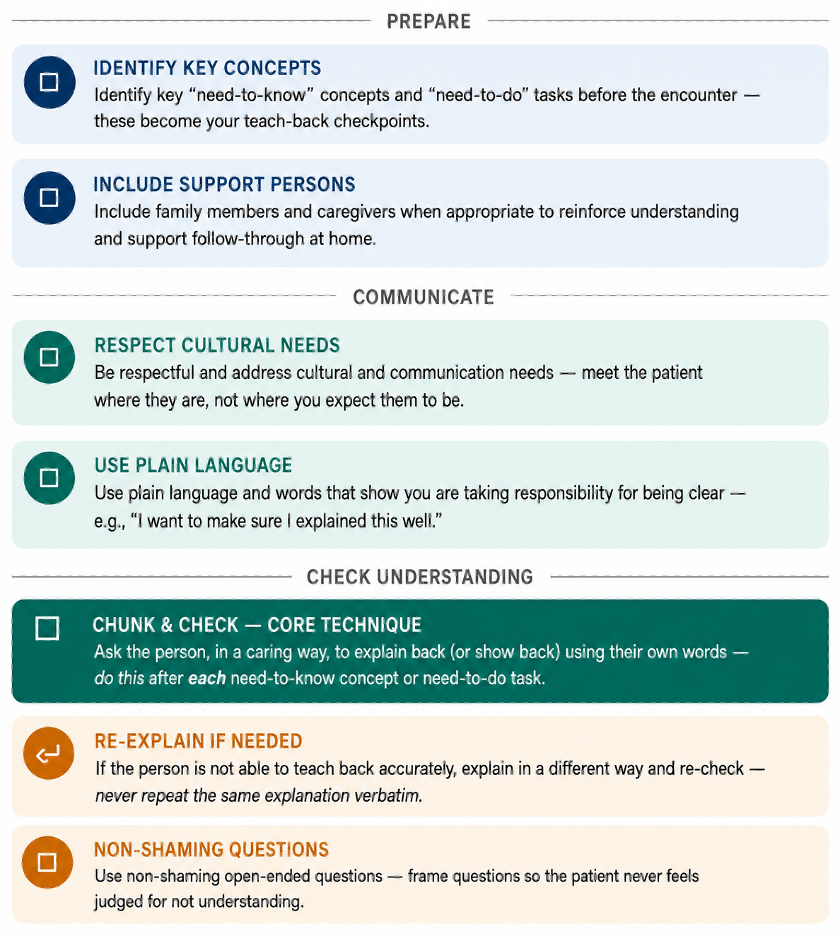
Support Patient Understanding Through Teach-Back: Use health literacy strategies to confirm patient understanding and improve communication

Framework diagram for patient-centered cardiovascular care in adults, showing how risk assessment, shared decision-making, and follow-up connect.

Framework diagram for patient-centered cardiovascular care in adults, showing how risk assessment, shared decision-making, and follow-up connect.

Improve Medication Adherence and Treatment Intensification

Treatment adherence can be improved by routinely identifying barriers, involving patients in care decisions, and using the full healthcare team to support medication management.

  • Routinely assess medication adherence and barriers
  • Ask open-ended questions about challenges with treatment plans
  • Involve patients in developing their treatment plan
  • Use pharmacists and care teams to support medication optimization

Resources

Patient Education Resources to Support HTN Treatment

Source: See HTN Resources (Reference 10, 20, 21)

Back to Cardiovascular Kidney Metabolic Toolkit