Obesity

Overview

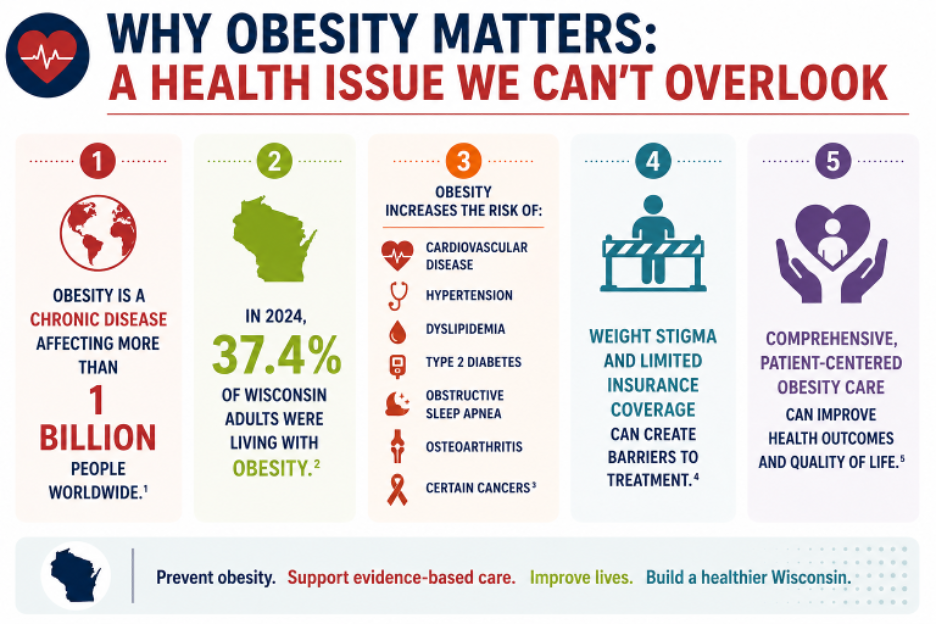
Infographic: Why Obesity Matters. Obesity affects 1 billion+ people worldwide and 37.4% of Wisconsin adults (2024). It raises risk of heart disease, diabetes, and other conditions. Weight stigma limits treatment access, while patient-centered care improves outcomes.
Source: See Diabetes Resources (References 1, 2, 4, 5)

Weight Bias and Patient Communication

  • Use Person-First Language: language that recognizes theindividual before the disease:
    • Person with obesity
    • Obese person

Weight bias can:

  • Reduce patient trust
  • Delay care seeking
  • Decrease engagement in treatment
  • Negatively impact quality of life

Starting the Conversation

  • Ask permission before discussion weight

Examples:

  • "Would it be okay if we talked about how weight may be affecting your health?"
  • "Are you intererested in discussing strategies that may improve your overall health and weight-related conditions?"


Motivational Interviewing

Motivational interviewing can help:

  • Explore readiness for change
  • Identify patient-centered goals
  • Increase engagement and adherence
  • Support long-term behavior change

Resources

Source: See Obesity Resources (References 5-7)                      

Treatment

Lifestyle Interventions

1. Nutrition: No single eating pattern is superior for every patient.

Focus on:

  • Calorie reduction when appropriate
  • Nutrient-dense foods
  • Sustainable eating patterns
  • Individualized plans based on patient preferences and health conditions

Resources

2. Sleep: Poor sleep contributes to increased hunger, reduced satiety, weight gain, and cardiometabolic disease risk

Providers should routinely assess:

  • Sleep duration
  • Sleep quality
  • Obstructive sleep apnea risk

Resources

3. Physical Activity: Provides substantial health benefits, even when weight loss is modest.

Benefits include:

  • Improved cardiovascular health
  • Improved glucose regulation
  • Better mental health
  • Preservation of lean muscle mass
  • Weight maintenance after weight loss

Resources

Obesity Myths and Facts

Myth: Obesity is caused solely by lack of willpower.

Fact: Obesity is a chronic, multifactorial disease influenced by genetics, biology, environment, social determinants of health, and behavior.

Myth: BMI tells the whole story.

Fact: BMI is a screening tool but does not directly measure body composition or health risk.

Myth: Exercise alone causes significant weight loss.

Fact: Exercise supports overall health and long-term weight maintenance but often results in modest weight loss by itself.

Myth: Smaller, more frequent meals are always better.

Fact: Meal timing and frequency should be individualized based on patient preferences and adherence.

Myth: Bariatric surgery is the "easy way out."

Fact: Bariatric surgery is the most effective long-term obesity treatment available and requires substantial preparation and lifelong follow-up.

Myth: Obesity medications are a shortcut.

Fact: Anti-obesity medications are evidence-based treatments for a chronic disease and should be used alongside lifestyle interventions when appropriate.

Source: See Obesity Resources (References 8, 16-18)

Pharmacotherapy

When to Consider Anti-Obesity Medication

Consider treatment for:

  • BMI ≥30 kg/m²
  • BMI ≥27 kg/m² with a weight-related comorbidity

Examples of comorbidities:

  • Type 2 diabetes
  • Hypertension
  • Dyslipidemia
  • Obstructive sleep apnea

FDA-Approved Medications

  • Semaglutide (Wegovy)
  • Tirzepatide (Zepbound)
  • Liraglutide (Saxenda)
  • Naltrexone/Bupropion (Contrave)
  • Phentermine/Topiramate (Qsymia)
  • Orlistat

Clinical Considerations

  • Review contraindications
  • Assess pregnancy risk
  • Discuss expected benefits and side effects
  • Discuss likelihood of weight regain after discontinuation
  • Evaluate response after approximately 3 months at therapeutic dose
  • Continue treatment when effective and tolerated

Resources

  • ADA Starting FDA-Approved Weight Management Medications (2024)

Procedural and Surgical Treatment

  • Endoscopic Options
    • Endoscopic Sleeve Gastroplasty
    • Intragastric Balloon
  • Bariatric Surgery: Remains the most effective and durable treatment for severe obesity
    Benefits include:
    • Significant weight loss
    • Improvement in diabetes
    • Improvement in HTN
    • Improvement in OSA
    • Reduced cardiovascular risk

Source: See Obesity Resources (References 3, 9-12)

Clinical Operations

Documentation and Coding: Document obesity and weight-related comorbidities whenever appropriate.

Common obesity-related conditions:

  • Hypertension
  • Dyslipidemia
  • Type 2 diabetes
  • Coronary artery disease
  • NAFLD
  • CKD
  • PCOS
  • Osteoarthritis
  • Obstructive sleep apnea
  • Mood disorders
  • Eating disorders

Coding

  • E66.9 Unspecified Obesity
  • Class I, II, or III obesity designation when appropriate

Source: See Obesity Resources (References 13, 14)

When to Refer

Screening for Secondary Causes

Endocrinology: routine endocrine screening is not recommended unless symptoms suggest an underlying condition.

Consider evaluation for

  • Hypothyroidism
  • Cushing syndrome
  • Acromegaly

Mental Health Provider:

  • Unaddressed depression, anxiety, or other mood disorder
  • Eating disorder
  • Trauma

Source: See Obesity Resources (References 19)

Creating an Obesity-Friendly Practice Environment

Ensure equipment safely accommodates patients of all sizes.

Consider:

  • Bariatric exam tables
  • High-capacity scales
  • Appropriate blood pressure cuffs
  • Bariatric wheelchairs
  • Patient lifts
  • Imaging equipment capacity
  • Appropriate seating and furnishings

Goal: Provide safe, accessible, and respectful care for all patients.

Source: See Obesity Resources (References 13, 14)