Team Based Care

Overview

Team-based care improves the management of chronic disease by leveraging the expertise of multiple healthcare professionals. Coordinated care supports better patient outcomes, medication adherence, preventive care, and self-management.
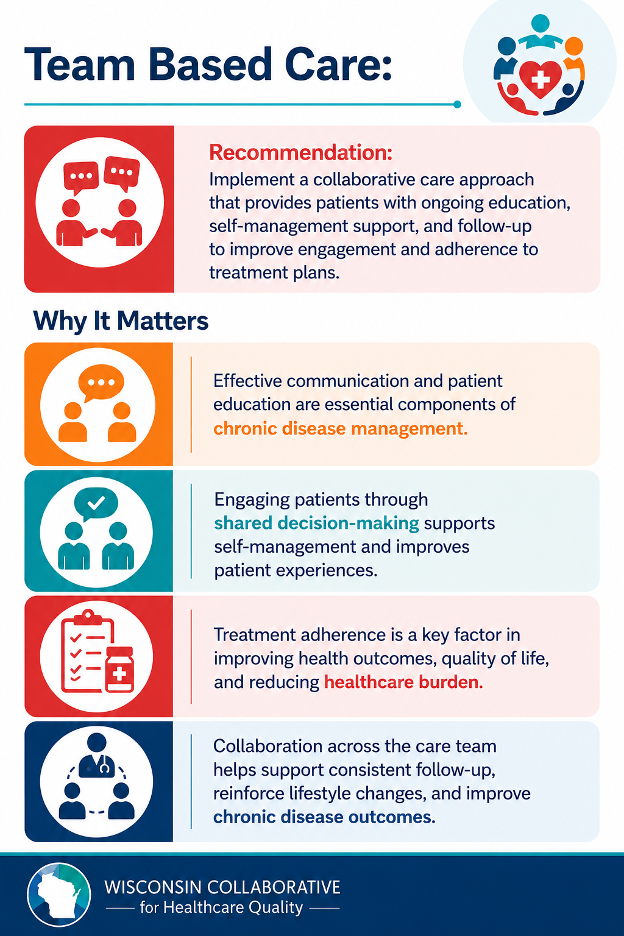
Team Based Care infographic. Recommendation: Implement a collaborative care approach that provides patients with ongoing education, self-management support, and follow-up to improve engagement and adherence to treatment plans. Why It Matters: Effective communication and patient education are essential components of chronic disease management. Engaging patients through shared decision-making supports self-management and improves patient experiences. Treatment adherence is a key factor in improving health outcomes, quality of life, and reducing healthcare burden. Collaboration across the care team helps support consistent follow-up, reinforce lifestyle changes, and improve chronic disease outcomes. Wisconsin Collaborative for Healthcare Quality.

Resource: See Team-Based Resources (References 1-3)

Key Members of the Care Team

  • Primary Care Provider
    • Diagnosis, treatment planning, risk assessment, care coordination, early
  • Nurse
    • Patient education, monitoring, outreach, self-management support
  • Pharmacist
    • Medication monitoring, adherence support, and optimization
  • Registered Dietitian
    • Nutrition counseling, individualized dietary strategies
  • Diabetes Care & Education Specialist
    • DSMES, behavior change support
  • Community Health Worker
    • Connect patients with resources and address social needs
  • Social worker
    • Assessment of social determinants of health and connect to resources
  • Specialists
    • Endocrinology, nephrology, cardiology, etc.
Circular diagram of five connected elements for maintaining effective team-based care, arranged clockwise: shared goals, clear roles, mutual trust, communication, and outcomes.

Source: See Team-Based Resources (References 6-9, 11)

Care Team Coordinator (CTC):

A designated team member who supports care coordination by documenting treatment plans, facilitating communication across providers, assessing patient needs, and ensuring care is tailored to each patient. The CTC helps advocate for patients, supports shared decision-making, and ensures the patient’s goals and preferences remain central to their care.
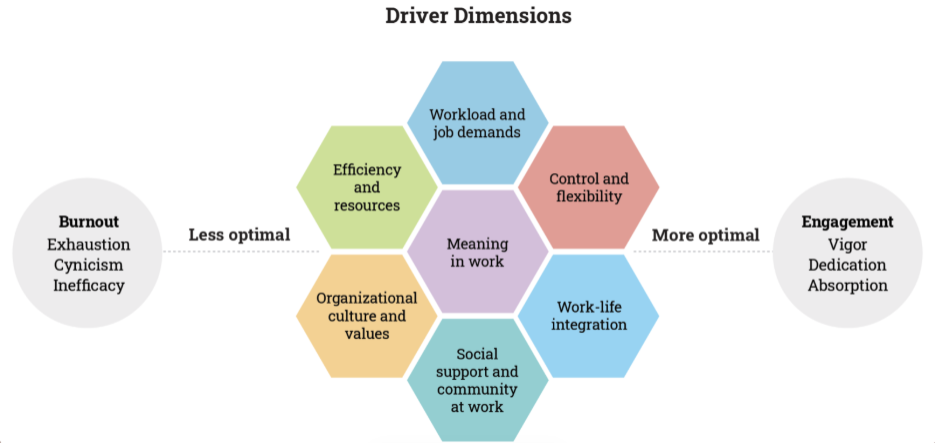
Team Collaboration as a Strategy to Reduce Clinician Burnout

Diagram titled 'Driver Dimensions' showing a spectrum from burnout (exhaustion, cynicism, inefficacy) on the less optimal end to engagement (vigor, dedication, absorption) on the more optimal end. A honeycomb of seven driver dimensions sits between the two ends, with meaning in work at the center, surrounded by workload and job demands, control and flexibility, work-life integration, social support and community at work, organizational culture and values, and efficiency and resources.
Click to View Full Screen

Learn More

Source: See Team-Based Resources (References 5, 10)

Team Based Care Toolkit References
Back to Health Cardiometabolic Health Toolkit